Quick answer: Paris has four fleas worth your metro ticket. The Marché aux Puces de Saint-Ouen (Saturday–Monday) is billed as the largest antiques market in the world and deserves a full morning. The Puces de Vanves (Saturday and Sunday, roughly 7am until 1pm) is the smaller market locals and dealers prowl first. Porte de Montreuil (Saturday–Monday) is the raw bargain pile, and the little Puces d’Aligre runs every morning except Monday next to one of the city’s best food markets.
Paris flea markets are called les puces — the fleas — because the first ones literally had them. In the 1880s the city pushed its chiffonniers, the ragpickers who resold Paris’s cast-offs, out beyond the fortifications, and they pitched camp at the city gates. A century and a half later the big markets still sit at the Portes — Clignancourt, Vanves, Montreuil — and still trade on the same promise: somebody else’s past, priced to move. Four markets, four very different hunts — here is how to choose. For the rest of the city, our Paris local guide has you covered.
Which Paris flea market should you pick?
Match the market to the mission. Chasing real antiques, design pieces or vintage fashion with provenance? Give Saint-Ouen a whole morning. After the ritual Parisians actually do — coffee, a slow lap of trestle tables, one small treasure carried home before lunch? That is Vanves. Happy digging through chaos for a two-euro win? Montreuil. And if your trip skips the weekend entirely, Aligre keeps the flea spirit alive six mornings a week.
Why do locals swear by the Puces de Vanves?
Because it is the right size for a Saturday morning. From around 7am on weekends, dealers unfold their tables along Avenue Marc Sangnier by the Porte de Vanves in the 14th — silverware, prints, costume jewellery, old postcards, café glassware, the occasional genuinely underpriced painting. There are no permanent shops and no roof, which keeps the stock turning and the prices honest. The catch is the clock: sellers start packing up around 12.30pm, so treat it strictly as a morning sport and be browsing by 10 at the latest. Afterwards, you are twenty minutes from a proper Left Bank lunch.
Is the Marché aux Puces de Saint-Ouen worth a whole day?
Yes — it is less a market than a small town. The Marché aux Puces de Saint-Ouen, just past the Porte de Clignancourt, gathers over a dozen covered and open-air markets off the Rue des Rosiers: hours run Saturday 9am–6pm, Sunday 10am–6pm and Monday 11am–5pm, with Friday mornings reserved for the trade. Start at Marché Vernaison, open since 1920 and still the closest thing to the original puces — some 300 stands of vintage posters, toys, linens and gloriously unclassifiable objects. Then graduate to Paul Bert Serpette, 370 dealers strong, where interior designers hunt midcentury furniture and museum-grade silver. Monday is the sleepy option: quieter aisles, but plenty of dealers stay shut. One honest warning — the walk from the metro runs a gauntlet of sneaker and phone-case stalls; keep going until the antiques begin, and keep your phone in a front pocket.
Where do you go for pure bargain hunting?
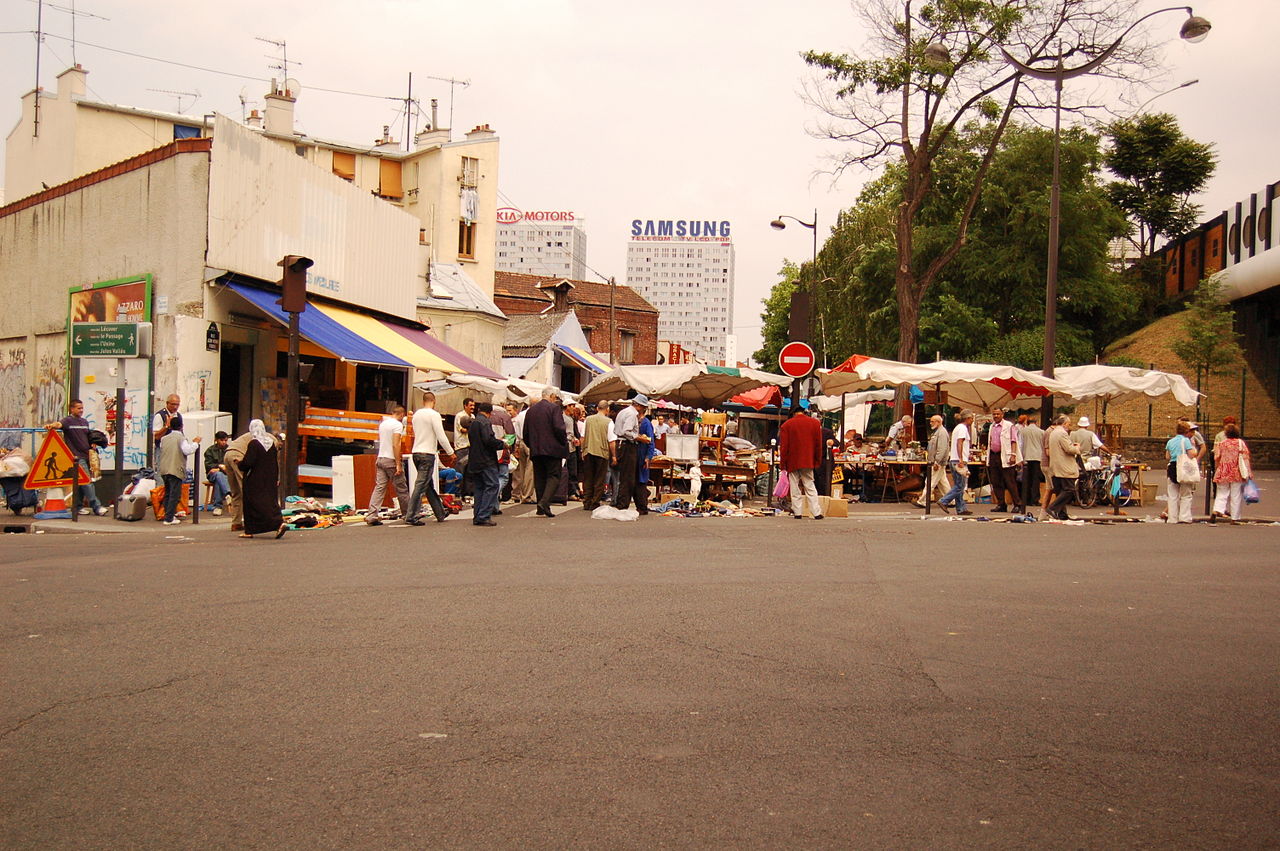
Porte de Montreuil, at the eastern edge of the 20th. No curation, no provenance, no velvet ropes — just hundreds of stalls of secondhand clothes, tools, crockery and bric-a-brac, Saturday through Monday from early morning to roughly 6.30pm. This is where Paris’s costume designers and vintage resellers source by the armful, and where patience is the entry fee: for every ten tables of junk there is one of gold. Bring small notes, haggle cheerfully, and expect to earn your finds.
What if your trip misses the weekend?
Head to the Marché d’Aligre in the 12th. Every morning except Monday, a huddle of brocante tables on the Place d’Aligre sells books, kitchenware and oddments while one of the city’s liveliest food markets shouts around it — produce stalls in the street, and the covered Marché Beauvau for cheese and charcuterie. It is the only place in Paris where you can buy a 1960s coffee grinder and the beans to put in it within thirty metres. Secondhand hunting also works any day of the week at La Recyclerie, a café and repair workshop in a former railway station at Porte de Clignancourt — a natural pairing with Saint-Ouen — plus the charity treasure troves of Emmaüs and the Marais vintage racks at Free’P’Star.
How do you flea-market like a Parisian?
Carry cash in small denominations; card readers exist but bargaining works better with paper. Open with a polite bonjour before touching anything — it genuinely changes the price you will be quoted. Ask «C’est votre meilleur prix?» and let the silence work; at Saint-Ouen expect movement of ten to twenty percent, more near closing time. Early birds get the finds, the final hour gets the discounts, and nobody sensible buys at two in the afternoon. Watch your bag in the crowds around Clignancourt, and build in a café stop — treasure judging is thirsty work.
Make a Paris day of it
The classic pairing is Montmartre and the puces: spend the morning on our Montmartre cheese, wine and pastry tour, then roll downhill to Saint-Ouen while the dealers are still pouring coffee. Or match Aligre’s market morning with an afternoon in the Marais and the Le Marais food tour. Neighbourhoods, transport and the rest of your trip live in our full Paris city guide.