Quick answer: Eat where Lisboetas actually eat and you will spend less and taste more. Have a no-menu lunch at a Mouraria tasca like O Zé dos Cornos, book Cervejaria Ramiro for garlicky prawns and a steak roll to finish, take the ferry across the Tagus to Ponto Final for a table at the water’s edge, and treat the pastel de nata as a daily habit rather than a single pilgrimage to Belém.
Lisbon rewards travellers who eat on local terms — standing at a marble counter for a bifana, sharing spare ribs at a communal table, ordering the day’s catch by weight. We are the team behind Like A Local Tours, and we have spent years leading food walks through Mouraria, Alfama and the lanes above the river. These are the tables we send friends to. To plan the rest of your visit, open our Lisbon local guide.
What exactly is a tasca — and why eat lunch in one?
A tasca is Lisbon’s neighbourhood tavern: a few tables, a paper tablecloth, a short handwritten menu and prices that feel like a decade ago. Lunch is the main event, so think of this as a midday plan rather than a dinner one. In Mouraria, O Zé dos Cornos packs strangers onto long shared tables for grilled spare ribs and bacalhau à brás (salt cod scrambled with egg and matchstick potatoes); arrive before 1pm or expect to queue, and bring cash. It is the clearest, cheapest window into how the city eats on a working weekday.
Where do locals go for seafood in Lisbon?
To a marisqueira — a beer hall built around shellfish. The benchmark is Cervejaria Ramiro on Avenida Almirante Reis, open since 1956 and still the name locals give visitors who ask. Order in rounds: garlic prawns, gambas, clams, maybe the barnacle-like percebes if they are in, then close the meal the way Lisboetas do, with a prego — a garlicky steak sandwich — standing in for dessert. Budget roughly €25–50 a head, expect no reservations and a queue at peak, and note the Monday closure. If you would rather have the seafood ordered and explained for you, our Lisbon food & wine tour works this same ground.
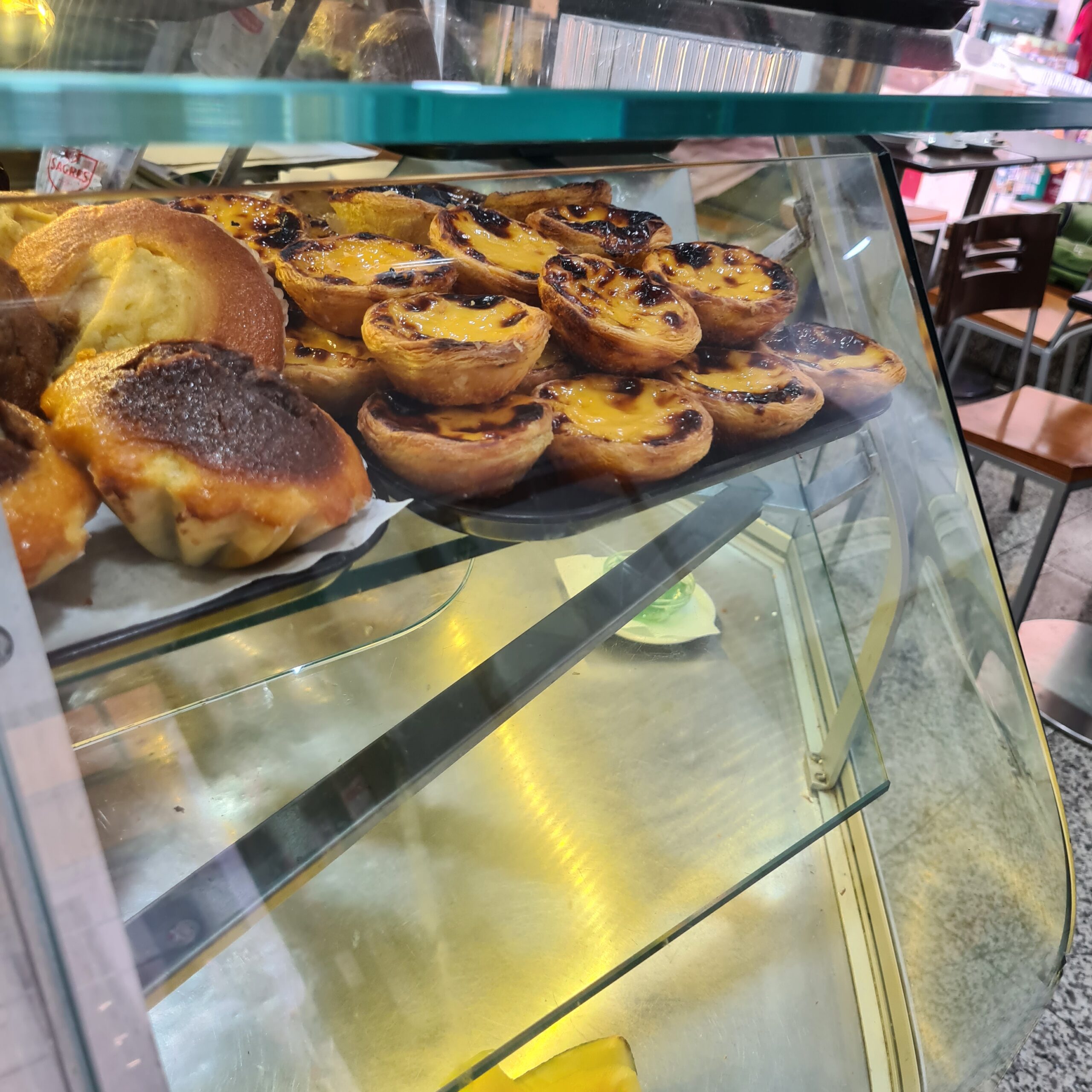
Is the pastel de nata really better in Belém?
Pastéis de Belém has baked its warm, custard-filled tarts to a guarded monastery recipe since 1837, and it is the only shop allowed to use that name; a single tart is about €1.50, or roughly €9 for a box of six, and the queues move faster than they look. Worth doing once. But the local truth is that the pastel de nata is an everyday pleasure, not a monument — almost any decent pastelaria will hand you a good one, warm and dusted with cinnamon, next to a bica (Lisbon’s short espresso) for pocket change. Eat one most mornings and you have understood the city.
Where do Lisboetas go for a proper sit-down feast?
When the occasion calls for a tablecloth, Solar dos Presuntos on Rua das Portas de Santo Antão has served generous northern-Portuguese cooking since 1974 — cured presunto to start, then arroz de marisco (seafood rice), cataplana or a whole grilled fish. It is a serious kitchen with genuinely warm service; book ahead, especially for dinner, and come hungry.
Is it worth crossing the river to eat?
Once, absolutely. From Cais do Sodré the ferry to Cacilhas takes about ten minutes, and a short walk along the old quay brings you to Ponto Final, where the tables sit almost on the water with Lisbon’s skyline, the 25 de Abril bridge and the Cristo Rei statue lined up across the Tagus. The cooking is honest grilled fish and Portuguese classics; the view does the rest. It is deservedly popular, closed Tuesdays, and books up well ahead — reserve by email before you travel.
Is Time Out Market worth it, or a tourist trap?
Both, honestly. Time Out Market, in the old Mercado da Ribeira at Cais do Sodré, gathers stalls from well-known Lisbon chefs under one roof; it is busier, louder and pricier than a neighbourhood tasca, and not where a local eats on an ordinary night. But for a mixed group, a rainy afternoon, or a first evening when you cannot face deciding, it is genuinely useful and the cooking is real. Go at off-peak hours and you will actually find a seat.
Where should I eat late — with fado or without?
For the full Lisbon evening, A Tasca do Chico in Bairro Alto pairs fado vadio — amateur singers taking turns through the night — with simple petiscos like chouriço assado flamed at the table; it is cash-only and cramped, so come early or squeeze in late. If you just want something quick and brilliant before bed, follow the charcoal smoke to Frangasqueira Nacional for takeaway piri-piri chicken at around €10–15 — among the best in the city, wrapped to go.
Make a day of it around the river
String it together the way locals do: a tasca lunch in Mouraria, a nata and a bica mid-afternoon, then either a seafood blowout at Ramiro or the ferry to Cacilhas for sunset. Keep it to one or two neighbourhoods a day and let the walking earn the next meal. Plan the rest with our Lisbon guide, or let us map the route for you.
Plan your trip to Lisbon
Compare food walks, tastings and tours across Mouraria, Alfama and Belém.
Some links above are affiliate links; if you book through them we may earn a small commission at no extra cost to you.