Quick answer: A local night in Belgrade splits three ways. For tradition, head to the cobbled Skadarlija quarter, where century-old kafanas like Tri Šešira (Skadarska 29) and Dva Jelena (Skadarska 32) still serve rakija and live starogradska music. For where young Belgraders actually drink, it’s the Cetinjska 15 courtyard — a former brewery packed with independent bars. And in summer (May–September) there are the splavovi, the floating clubs moored on the Sava and Danube. A beer runs about 300–400 dinars (roughly €2.50–3.50).
Belgrade has a reputation as the party capital of the Balkans, and the internet will happily point you at a row of loud river barges and call it a night out. Locals rarely start there. Ask a Belgrader and the answer shifts with the season, the hour, and whether you feel like singing along to an accordion or disappearing into a courtyard until sunrise. This guide, from the team behind Like A Local Tours, walks you through the three Belgrades that come out after dark — the tavern, the courtyard, and the river — and how to read each one.
What is a kafana, and which ones still have live music?
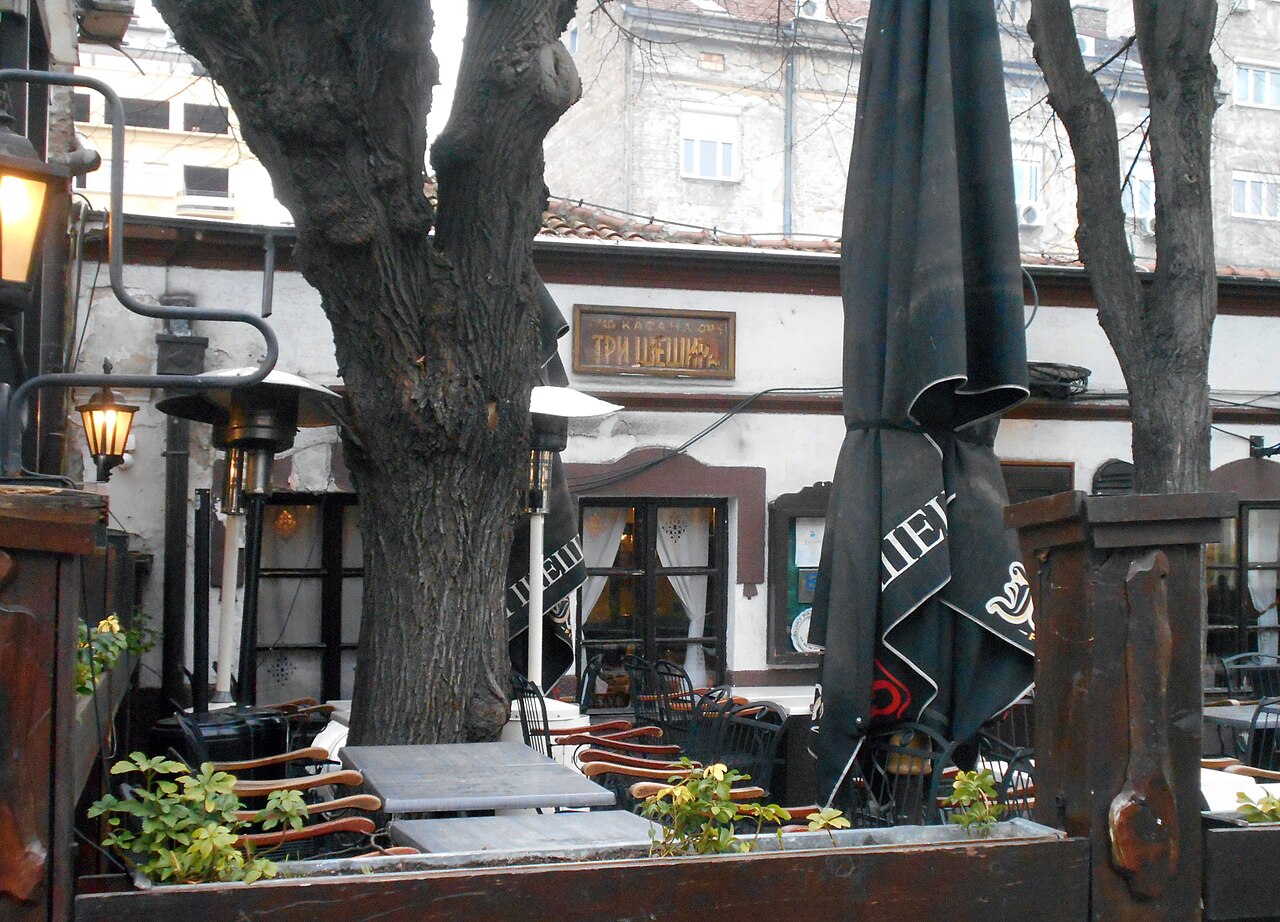
The kafana is the soul of a Belgrade night: part tavern, part restaurant, part living room, where people come to eat slowly, drink rakija, and stay for hours while a small band plays. The oldest cluster sits in Skadarlija, the short cobbled street that has been the city’s bohemian quarter since the 19th century. Tri Šešira (“Three Hats,” Skadarska 29) opened in 1864 and still runs from late morning until around 2am, with grilled meats, folk musicians moving table to table, and a tree-shaded terrace. A few doors down, Dva Jelena (“Two Deer,” Skadarska 32) dates to 1832 and leans into the same warm, slightly theatrical Old Belgrade atmosphere — live starogradska (old-town) songs, domestic wine, and rakija poured with intent. Both are touristy by day and genuinely lovely at night; book ahead for a weekend table, and expect the band to take requests if you ask nicely.
Where do young Belgraders actually drink?
Not in Skadarlija. The real answer, most nights of the year, is Cetinjska 15 — a former brewery complex tucked behind Trg Republike whose gated courtyard has filled up with a dozen independent bars, gig rooms, and gallery spaces. You buy a beer at one door, wander to the next, and drift between six or eight venues without ever leaving the yard. Polet is the anchor, an art-gallery-meets-bar that hosts everything from poetry nights to full-blown parties (open until 1am on weekends); nearby you’ll find craft-beer spots and DJ rooms rotating crowds until late. It is scrappy, cheap, unpretentious, and open year-round — the closest thing Belgrade has to a single answer for “where’s good tonight?” If you’ve done the ruin-bar circuit elsewhere, the DNA will feel familiar — see our Budapest ruin bars guide for the Hungarian cousin, or our Krakow nightlife guide for another courtyard-heavy city.
Are the splavovi worth it — and are they even still there?
The splavovi (floating clubs, singular splav) are Belgrade’s signature party image: rafts moored along the Sava and Danube that turn into open-air clubs blasting everything from house to turbo-folk. They are a warm-weather thing only, running roughly May to September, and the big commercial names — Freestyler, Hype, Lasta and their neighbours — are polished, VIP-table venues built for large crowds rather than local intimacy. One honest caveat worth knowing this summer: since a 2025 riverbank clean-up project, many of the rafts have been moved from their long-time moorings and their permanent locations are still in flux, so check a venue’s current spot before you set out rather than trusting an old address. Go for the novelty of dancing on the water, keep your expectations calibrated, and don’t build the whole night around them.
What should you drink, and what should you know?
Order rakija — the fruit brandy that anchors every Serbian table, most classically šljivovica (plum). It is sipped, not shot, usually before or alongside food. Domestic draught beer (Jelen, Lav) is cheap; local craft beer has a small but growing scene. A few practical notes: carry some cash, as smaller kafanas and courtyard bars can be card-shy; nights start late, with courtyards and splavovi only filling after 11pm or midnight; and ignore anyone on the street steering you toward a specific bar or “club” — that hustle exists in every city and never leads anywhere good. Belgrade is one of Europe’s safest capitals for a night out, but the ordinary rules apply.
What does a Belgrade night cost, and where should you base yourself?
Belgrade is refreshingly affordable: budget around 300–400 dinars (€2.50–3.50) for a beer, a little more for cocktails, and a rakija for pocket change. Kafanas and courtyard bars charge no entry; the commercial splavovi may add a cover or table minimum on big nights. To be within walking distance of both Skadarlija and Cetinjska, stay around Stari Grad (the Old Town) or nearby Dorćol. If the Balkans are your wider route, our guides to things to do in Sarajevo and things to do in Bucharest pair well with a Belgrade stop.
Plan your Belgrade night
See which beds sit closest to Skadarlija, Cetinjska and the riverfront — all on one map.
Find places to stay in Belgrade
The link above is an affiliate link — book through it and we earn a small commission at no extra cost to you.